
Humble Beginnings
From a quiet carpenter’s home in St. Peter, Minnesota, two sons rose to national prominence, earning appointments to West Point and serving in pivotal military campaigns of the late 19th and early 20th centuries. Their story offers a remarkable example of service, sacrifice, and the global reach of a Nicollet County upbringing.
Sven and Margreta Johnson, Swedish immigrants who settled in St. Peter in the 1850s, raised a large family in the growing river town. Church records at First Lutheran Church capture the births of many of their children: Franklin Oliver (1858), Arthur Abednego (1861), Elna (1863), Clarence (1865), Aaron (1869), and Augusta (1875). Esther, another daughter, appears in the 1880 census as eight years old, though her exact birth details are unclear. The Johnson family had deep roots in Nicollet County, but the paths of Franklin and Arthur carried them far beyond Minnesota’s borders.
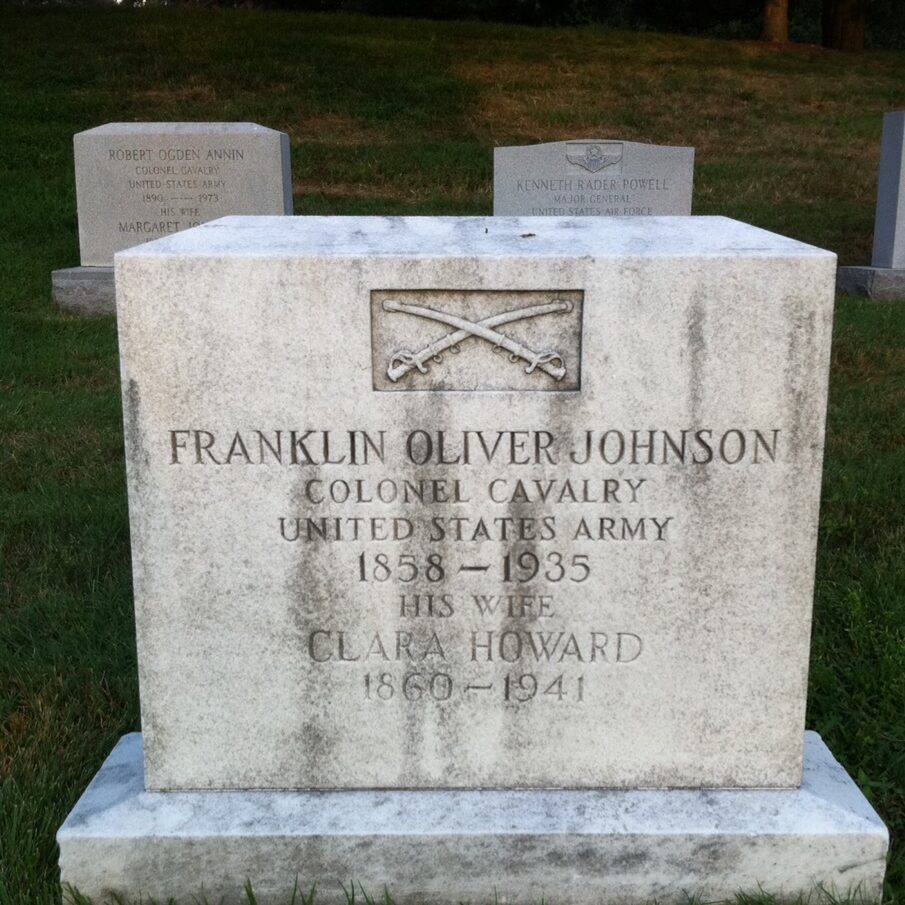
Franklin Oliver Johnson
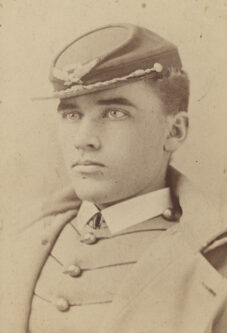
Franklin entered the U.S. Military Academy at West Point in 1877 and graduated in 1881 as a Second Lieutenant in the 3rd Cavalry Regiment. His early career took him to the American West, where he fought at the Battle of Big Dry Wash in Arizona Territory in 1882—an engagement with Apache forces that became one of the last major battles of the Apache Wars.
Throughout his frontier service, Franklin also led Native American scouts and served as Regimental Quartermaster, responsible for managing critical supplies in remote and rugged outposts. His ability to adapt to different environments and duties made him a respected officer within the ranks.
By the late 1890s, Franklin served in Cuba during the Spanish-American War, earning a Silver Star for gallantry at the Battle of Santiago. His service didn’t stop there. In the early 1900s, he was stationed in the Philippines during the Philippine-American War, helping to quell resistance after the U.S. annexed the islands from Spain.
During World War I, Franklin was stationed in Columbus, Ohio, managing training and supply operations vital to the war effort. After four decades in uniform, he retired in 1922 as a Colonel. He and his wife eventually settled in Washington, D.C., but spent much of their retirement traveling across Europe. He was known to have a sharp mind and a keen interest in international affairs, which he nurtured during his post-military travels. Franklin died in 1935 at Walter Reed Hospital and was laid to rest with military honors in Arlington National Cemetery.
Arthur Abednego Johnson
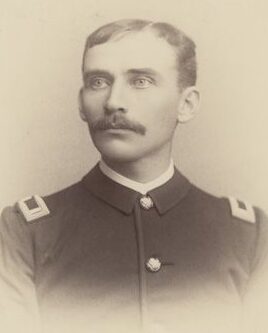
Like his older brother, Arthur attended West Point and graduated in 1886. Among his classmates was none other than John J. Pershing, who would later command the American Expeditionary Forces in World War I. Arthur’s career was distinguished in its own right.
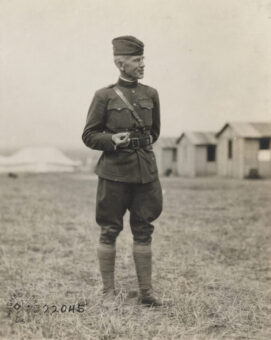
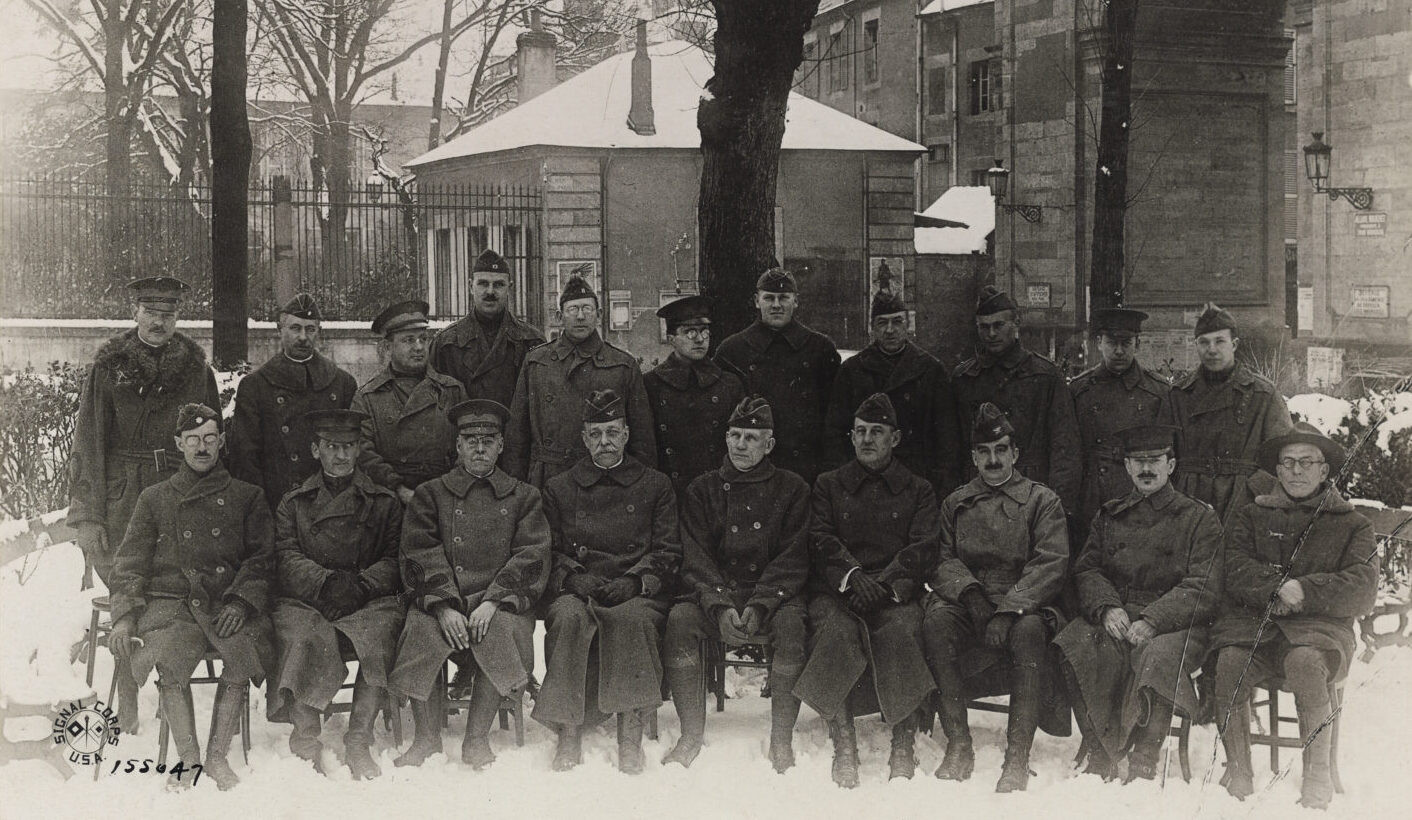
Arthur saw early combat during the Indian Wars in the Southwest and later led troops in Cuba during the Spanish-American War. He served again in the Philippines and took on key leadership roles during World War I, including as commanding general of the intermediate services of supplies in France. This critical role ensured American troops remained fed, armed, and equipped far from home.
He was known for his logistical expertise and attention to detail, skills that were vital to maintaining momentum on the front lines. Arthur’s peers and subordinates described him as steady, capable, and deeply committed to the well-being of the soldiers under his command. In addition to his wartime service, he held posts across the United States, helping train and prepare future officers for the changing nature of modern warfare.
Over the years, Arthur also studied at the Army School of the Line and the Army War College, institutions that helped shape the strategic leaders of the 20th century. His dedication earned him multiple honors, including the Distinguished Service Medal, the Silver Star, and the French Legion of Honor.
After retiring in 1925 as a Brigadier General, Arthur settled in Wilmette, Illinois. He passed away in 1946 and was also buried at Arlington National Cemetery. He left behind his wife, Edith, and four children—several of whom followed his path into military service.

A Lasting Legacy
The Johnson brothers’ rise from St. Peter to the highest ranks of the U.S. military reminds us that the stories rooted in Nicollet County are often part of something much larger. Their lives reflect how one family’s hopes, hard work, and devotion to service can echo across generations and across continents.
Their legacy is preserved in military archives, cemetery stones at Arlington, and right here at home in the church records of First Lutheran and the stories passed down through community memory.

More from the Blog
Harmonizing Heritage
Discover the history of the Vogelpohl & Spaeth organ at Bernadotte Lutheran Church, a cherished symbol of musical heritage and community spirit in Nicollet County.
BEYER & BERBRICH SALOON
The intertwined stories of Otto Berbrich and August Beyer mirror the experiences of numerous German immigrants who made their way to Minnesota in the late 1800s. Otto’s journey led him…
Joseph Nicollet and his map
French scientist, geographer, and mathematician Joseph Nicollet led three important expeditions from 1836 through 1839. His Map of the Hydrographical Basin of the Upper Mississippi covered parts of what would…
Transcript: A Bill for the Removal of the Capitol of the Territory or Future State of Minnesota, and for other purposes
This document contains the text of a bill that was passed by the Minnesota Territorial Legislature in 1857 to transfer the capital of Minnesota from St. Paul to St. Peter….
X Marks the Spot
Traverse des Sioux has always been a great gathering place for people in this area. Human life here dates back 9,000 years. We don’t think about this much today but,…
Why “Rock Bend”?
For many years, people have come to St. Peter each September to enjoy the Rock Bend Folk Festival’s music and sense of community. What many festivalgoers may not realize is…
Fourth of July
As you celebrate today, take a moment to check out this Fourth of July photo parade. Have a happy and safe weekend!
Minnesota River Flooding June 2024
Sunday, June 23, 2024 Monday, June 24, 2024 Tuesday, June 25, 2024 Thursday, June 27 & Friday, June 28, 2024 Saturday, June 29, 2024
Asgrim K. Skaro Grand Army of the Republic Post Number 37, St. Peter, Minnesota
By Bob Sandeen Formation of the GAR After the Civil War, many communities in the United States formed posts of an organization known as the Grand Army of the Republic…
The Changing Shape of Nicollet County
When Nicollet County was first established in 1853, its borders looked very different from today. Early maps placed its northern boundary along the Crow River, and the county seat moved…