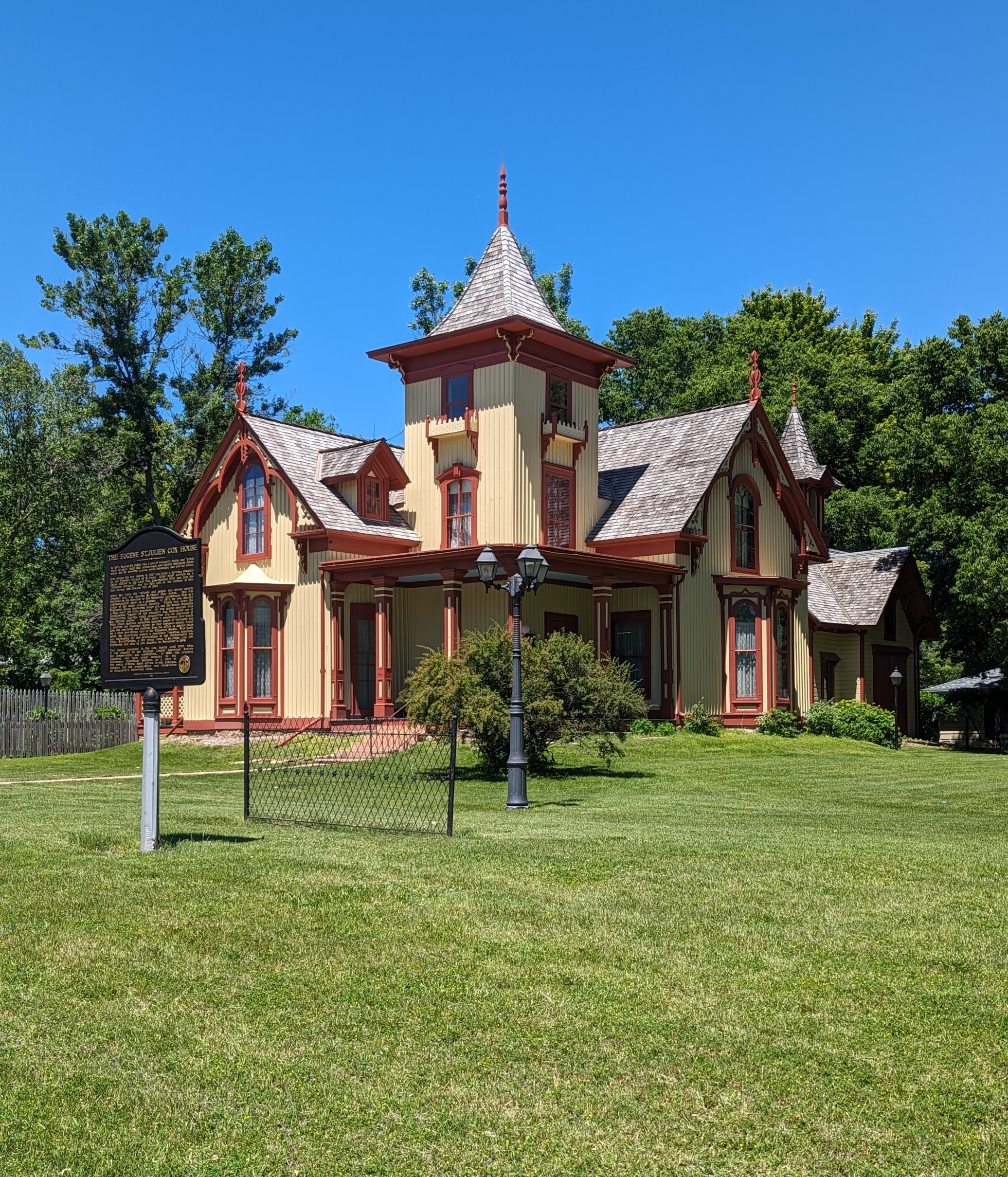

The Nicollet County Historical Society announces the return of summer tours at the E. St. Julien Cox House in St. Peter.
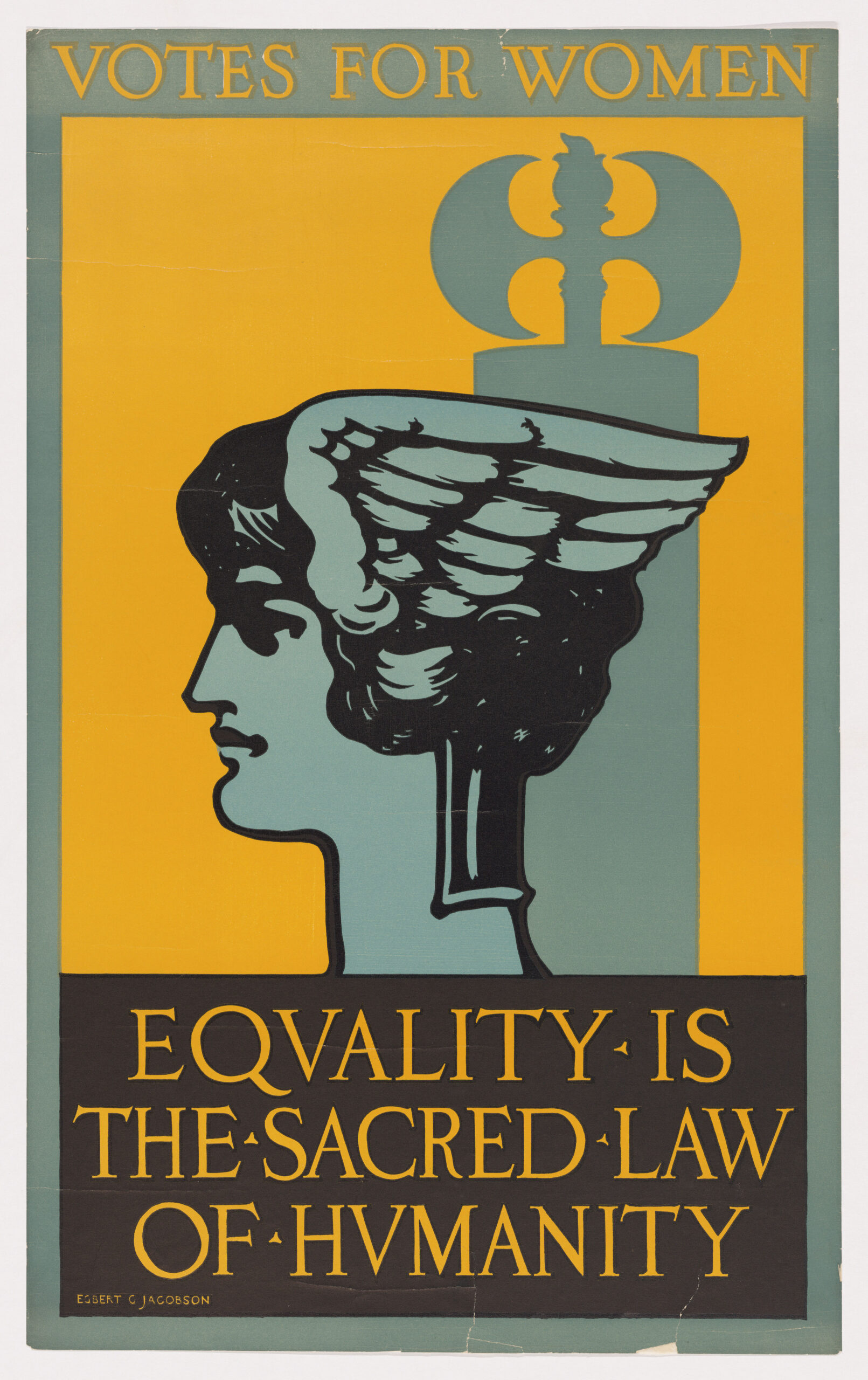
This summer, visitors can explore the beautifully restored Victorian home at their own pace and see Votes for Women: A Portrait of Persistence, a Smithsonian poster exhibition on the women’s suffrage movement, displayed on the main floor.
The story of women’s suffrage is a story of voting rights, inclusion in and exclusion from the franchise, and civic development as a nation. Votes for Women: A Portrait of Persistence explores the complexity of the women’s suffrage movement and its relevance to Americans’ lives today. Based on the National Portrait Gallery exhibition of the same name, the poster exhibition addresses women’s political activism, explores the racism that challenged universal suffrage, and documents the ratification of the 19th Amendment, which prohibits the government from denying U.S. citizens the right to vote on the basis of gender.
To connect the national story to local history, the Nicollet County Historical Society has created companion interpretation panels about Lillien Cox Gault, daughter of St. Peter’s first mayor, E. St. Julien Cox. Lillien grew up in the house and later became a leader in voter education and mobilization following the ratification of the 19th Amendment in 1920. She led registration and citizenship efforts across Nicollet County, helped establish the local League of Women Voters, and continued her civic leadership when she became one of only three women serving as mayor in Minnesota in 1922. The companion panels draw on local newspaper accounts and historical records to tell her story.
Tours are free and self-paced. No reservations are required. Visitors receive a brief introduction and a printed guide to explore the house room by room. Free-will donations are accepted and support the preservation of the Cox House.
2026 Summer Tour Schedule
All tours begin at 1:00 p.m.
Saturday, June 6
Saturday, June 20
Saturday, July 18
Saturday, August 1
Saturday, August 15
Saturday, August 29
For more information, visit https://www.nchsmn.org/series/cox-house-summer-tours/.
About the E. St. Julien Cox House
Built in 1871 by Eugene St. Julien Cox, the first mayor of Saint Peter, the E. St. Julien Cox House is one of the few fully restored Carpenter Gothic-Italianate cottages in Minnesota. Listed on the National Register of Historic Places, the house was donated to the Nicollet County Historical Society in 1968 and reopened as a historic house museum in 1971.
About the Smithsonian Institution Traveling Exhibition Service (SITES)
SITES has been sharing the wealth of Smithsonian collections and research programs with millions of people outside Washington, D.C., for more than 65 years. SITES connects Americans to their shared cultural heritage through a wide range of exhibitions about art, science and history, which are shown wherever people live, work and play. For exhibition descriptions and tour schedules, visit sites.si.edu.
About the National Portrait Gallery
The mission of the National Portrait Gallery is to tell the story of America by portraying the people who shape the nation’s history, development and culture. Through the visual arts, performing arts, and new media, the Portrait Gallery presents poets and presidents, visionaries and villains, actors and activists whose lives form our national identity. npg.si.edu
About the American Women’s History Initiative
The Smithsonian American Women’s History Initiative (AWHI) will create, educate, disseminate, and amplify the historical record of the accomplishments of American women. With a digital-first mission and focus, the initiative uses technology to amplify a diversity of women’s voices throughout the Smithsonian’s many museums, research centers, cultural heritage affiliates and wherever people are online. womenshistory.si.edu
Exhibition Credit
Votes for Women: A Portrait of Persistence is organized by the Smithsonian Institution Traveling Exhibition Service in collaboration with the National Portrait Gallery. This project received support from the Smithsonian American Women’s History Initiative.