Step back in time and experience the Victorian era with a visit to the Cox House.
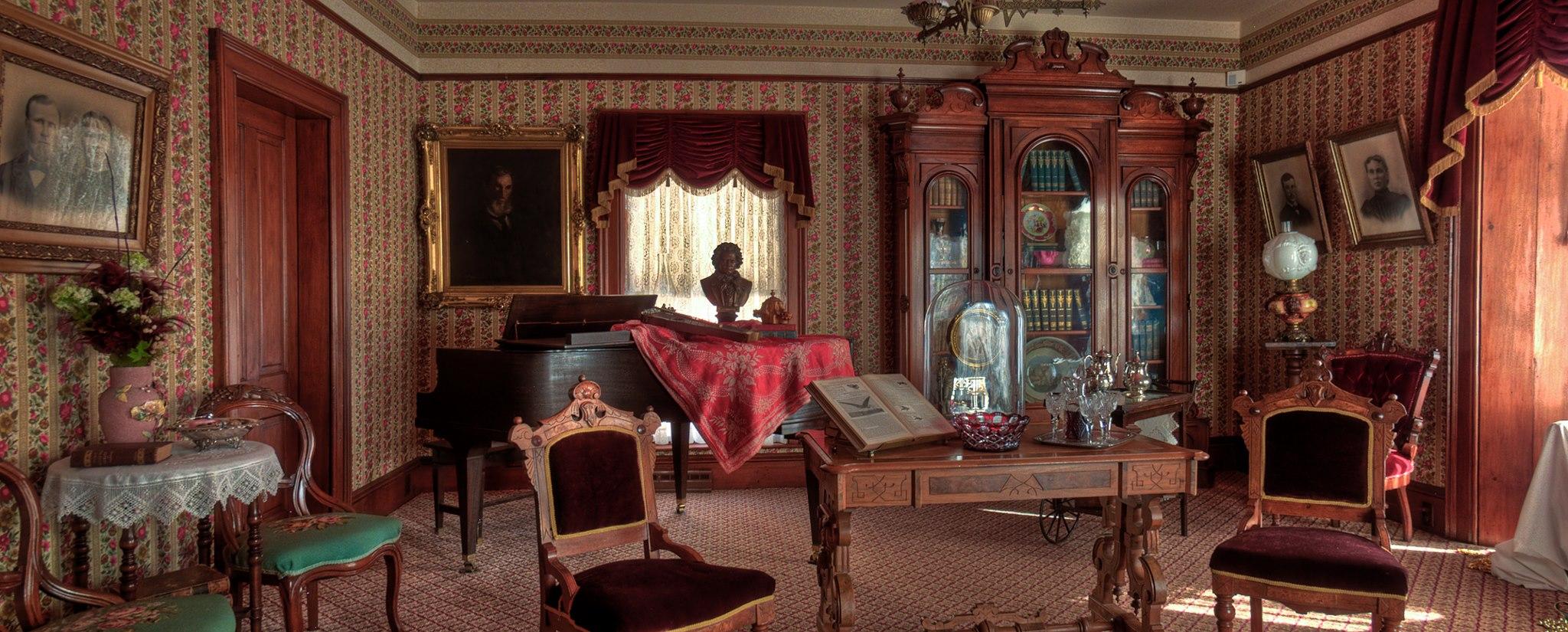
When you arrive, we’ll give you a brief introduction and a printed guide to help you move from room to room and experience what Victorian-era living looked like.
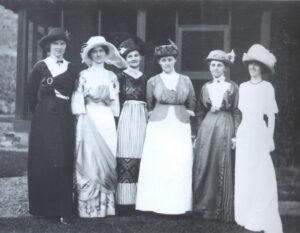
Summer 2026, we’re also featuring Votes for Women: A Portrait of Persistence on the main floor, a Smithsonian poster exhibit that explores the women’s suffrage movement and connects it to local history through the life of Lillien Cox Gault.
Admission is free. Free-will donations are gratefully accepted and help us care for this beautiful historic home.
Free will donations are welcome to help us support this historic property
ACCESSIBILITY
The Cox House is not fully accessible. Get details on directions, parking, and accessibility here.
CONTACT US
500 N. Washington Ave.
Saint Peter, MN 56082
507-934-2160 cox@nchsmn.org
Beautiful mid-Victorian home in St Peter. Well worth the visit!
TJ Malaskee
Family History
Architecture
Trivia
Garden Sundial
Family History
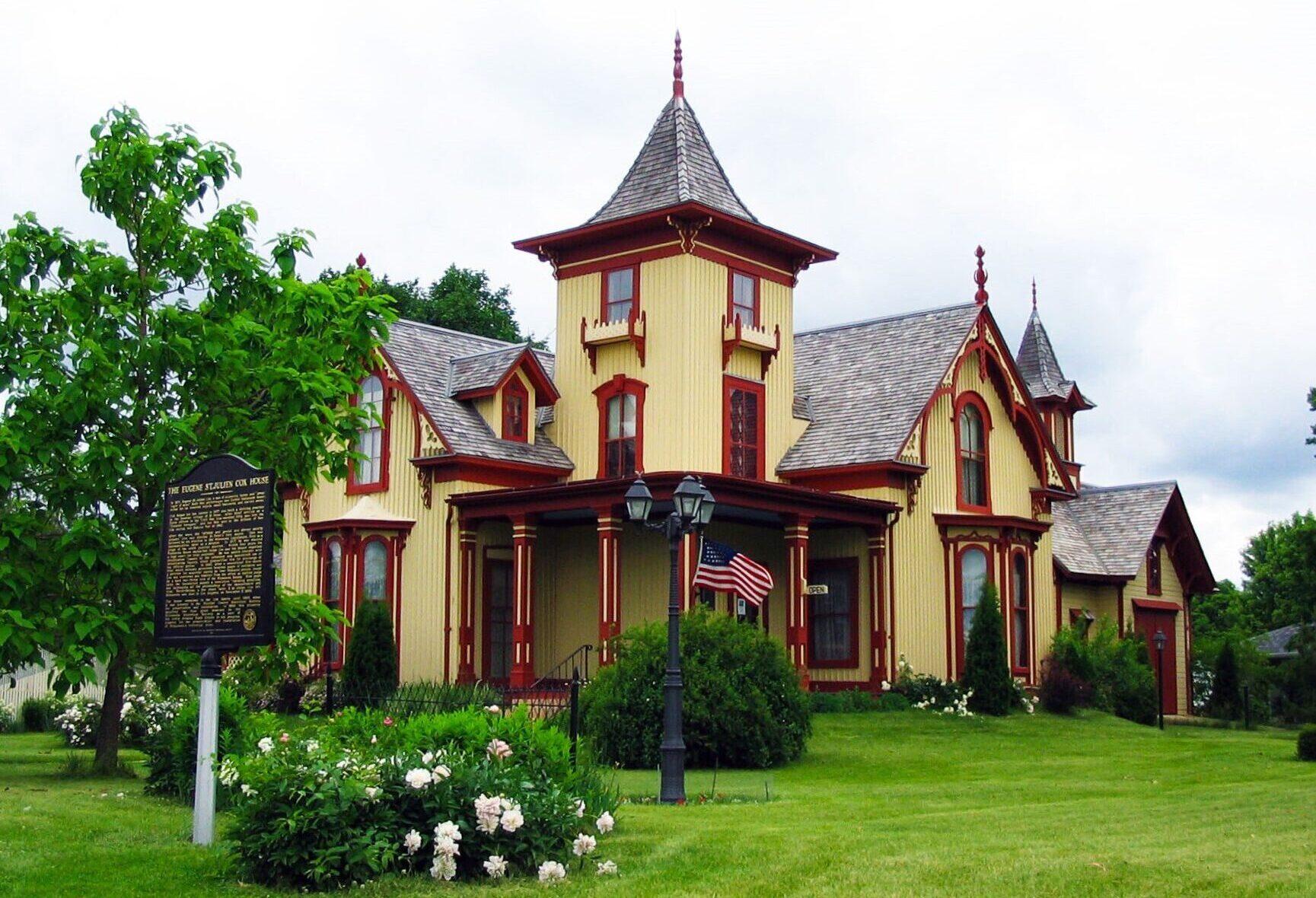
The Cox House was built in 1871 by Eugene St. Julien Cox and his wife, Mariah (Mayhew) Cox. The couple and their six children were the first occupants of the house, which remained in the family for three generations. In 1968, the house was donated to the Nicollet County Historical Society, restored, and re-opened to the public in 1971 as a historic house museum.
Architecture
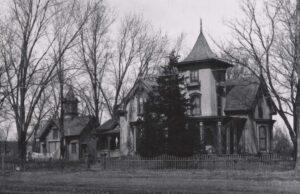
What makes the house unique is its architectural style. The house is a prime example of a Carpenter Gothic-Italianate Cottage, a combination of styles that were all the rage in the latter half of the nineteenth century in the cities of the American East but would have stood out for its exuberance and style in 1870s pioneer Minnesota. The architecture shows vertical board & batten siding, pillars, long windows, and cathedral cupolas that lend an imposing look to the structure.
Trivia
Eugene St. Julien Cox was the first mayor of St. Peter
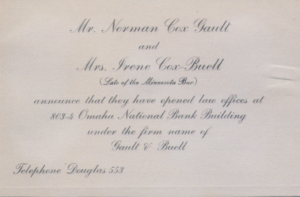
Lillien Cox Gault was Minnesota’s first female mayor of a city and Minnesota’s third female mayor
The house was added to the National Register of Historic Places in 1970.
One of the few fully restored Carpenter Gothic cottages in Minnesota.
The Sundial in the garden was given by Helen Churchill and the Minnehaha, the Chapter 111 Questers, in loving memory of departed members.